The Print the Whales Make
You and I on the boat notice
the print the whales leave,
the huge ring their diving draws
for a time on the surface.
Is it like that when we
lose one another? Don't
know, can't. But
I want to believe
when we can no longer
walk across a room
for a hug, can no longer
step into the arms of the other,
there will be this:
some trace that stays
while the great body
remains below out of sight,
dark mammoth shadow
flick of flipper
body of delight
diving deep.
by Marjorie Saiser from her book
I Have Nothing to Say About Fire
from Backwaters Press

Friday, January 20, 2017


Sunday, January 15, 2017
Descending Theology: Christ Human
by Mary Karr
Such a short voyage for a god,
and you arrived in animal form so as not
to scorch us with your glory.
Your mask was an infant’s head on a limp stalk,
sticky eyes smeared blind,
limbs rendered useless in swaddle.
You came among beasts
as one, came into our care or its lack, came crying
as we all do, because the human frame
is a crucifix, each skeletos borne a lifetime.
Any wanting soul lain
prostrate on a floor to receive a pouring of sunlight
might–if still enough,
feel your cross buried in the flesh.
One has only to surrender,
you preached, open both arms to the inner,
the ever-present hold,
out-reaching every want. It’s in the form
embedded, love adamant as bone.
In a breath, we can bloom and almost be you.
Poetry Magazine, December 2001, by Mary Karr
Tuesday, December 20, 2016
Advent Calendar, by Gjertrud Schnackenberg
Bethlehem in Germany,
Glitter on the sloping roofs,
Breadcrumbs on the windowsills,
Candles in the Christmas trees,
Hearths with pairs of empty shoes:
Panels of Nativity
Open paper scenes where doors
Open into other scenes,
Some recounted, some foretold.
Blizzard-sprinkled flakes of gold
Gleam from small interiors,
Picture-boxes in the stars
Open up like cupboard doors
In a cabinet Jesus built.
Southern German villagers,
Peasants in the mica frost,
See the comet streaming down,
Heavenly faces, each alone,
Faces lifted, startled, lost,
As if lightning lit the town.
Sitting in an upstairs window
Patiently the village scholar
Raises his nearsighted face,
Interrupted by the star.
Left and right his hands lie stricken
Useless on his heavy book.
When I lift the paper door
In the ceiling of his study
One canary-angel glimmers,
Flitting in the candelabra,
Peers and quizzes him: Rabbi,
What are the spheres surmounted by?
But his lips are motionless.
Child, what are you asking for?
Look, he gazes past the roofs,
Gazes where the bitter North,
Stretched across the empty place,
Opens door by door by door.
This is childhood's shrunken door.
When I touch the glittering crumbs,
When I cry to be admitted,
No one answers, no one comes.
And the tailor's needle flashes
In midair with thread pulled tight,
Stitching a baptismal gown.
But the gown, the seventh door,
Turns up an interior
Hidden from the tailor's eyes:
Baby presents like the boxes
Angels hold on streets and stairways,
Wooden soldier, wooden sword,
Chocolate coins in crinkled gold,
Hints of something bought and sold,
Hints of murder in the stars.
Baby's gown is sown with glitter
Spread across the tailor's lap.
Up above his painted ceiling
Baby mouse's skeleton
Crumbles in the mouse's trap.
Leaning from the cliff of heaven,
Indicating whom he weeps for,
Joseph lifts his lamp above
The infant like a candle-crown.
Let my fingers touch the silence
Where the infant's father cries.
Give me entrance to the village
From my childhood where the doorways
Open pictures in the skies.
But when all the doors are open,
No one sees that I've returned.
When I cry to be admitted,
No one answers, no one comes.
Clinging to my fingers only
Pain, like glitter bits adhering,
When I touch the shining crumbs.
Gjertrud Schnackenberg, "Advent Calendar" from Supernatural Love: Poems 1976-1992.
Copyright © 2000 by Gjertrud Schnackenberg.
Tuesday, October 11, 2016
A Small Story
When Mrs. McCausland comes to mind
she slips through a small gap in oblivion
and walks down her front steps, in her hand
a small red velvet pillow she tucks
under the head of Old Jim Schreiber,
who is lying dead-drunk against the curb
of busy Market Street. Then she turns,
labors up the steps and is gone . . .
A small story. Or rather, the memory
of a story I heard as a boy. The witnesses
are not to be found, the steps lead nowhere,
the pillow has collapsed into a thread of dust . . .
Do the dead come back only to remind us
they, too, were once among the living,
and that the story we make of our lives
is a mystery of luminous, but uncertain moments,
a shuffle of images we carry toward sleep—
Mrs. McCausland with her velvet pillow,
Old Jim at peace—a story, like a small
clearing in the woods at night, seen
from the windows of a passing train.
by Peter Everwine
When Mrs. McCausland comes to mind
she slips through a small gap in oblivion
and walks down her front steps, in her hand
a small red velvet pillow she tucks
under the head of Old Jim Schreiber,
who is lying dead-drunk against the curb
of busy Market Street. Then she turns,
labors up the steps and is gone . . .
A small story. Or rather, the memory
of a story I heard as a boy. The witnesses
are not to be found, the steps lead nowhere,
the pillow has collapsed into a thread of dust . . .
Do the dead come back only to remind us
they, too, were once among the living,
and that the story we make of our lives
is a mystery of luminous, but uncertain moments,
a shuffle of images we carry toward sleep—
Mrs. McCausland with her velvet pillow,
Old Jim at peace—a story, like a small
clearing in the woods at night, seen
from the windows of a passing train.
by Peter Everwine
Friday, April 15, 2016
|
|
|
Thursday, April 14, 2016
CANDLES by Constantine Cavafy, translated by David Coomler at
https://hokku.wordpress.com/2016/04/06/the-days-dwindle-down-cavafys-candles/
https://hokku.wordpress.com/2016/04/06/the-days-dwindle-down-cavafys-candles/
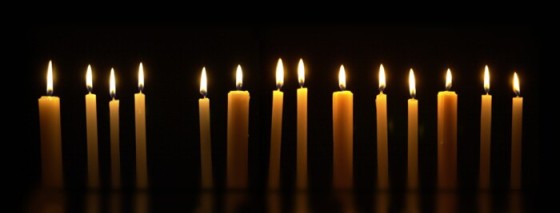
The days to come stand before us
Like a row of lighted candles --
Golden, warm, and lively.
Like a row of lighted candles --
Golden, warm, and lively.
The days gone by remain behind,
A sad line of extinguished candles,
The nearest still smoking;
Cold candles, melted and bent.
A sad line of extinguished candles,
The nearest still smoking;
Cold candles, melted and bent.
I don't want to look at them; their form saddens me,
And it saddens me to remember their first light.
I look ahead to my lit candles.
And it saddens me to remember their first light.
I look ahead to my lit candles.
I don't want to turn back, to see and tremble:
How fast the dark line grows --
How fast the extinguished candles multiply.
How fast the dark line grows --
How fast the extinguished candles multiply.
Sunday, December 13, 2015
| ||||||||
|
Saturday, December 12, 2015
Praising Manners
We should ask God
To help us toward manners. Inner gifts
Do not find their way
To creatures without just respect.
If a man or woman flails about, he not only
Smashes his house,
He burns the whole world down.
Your depression is connected to your insolence
And your refusal to praise. If a man or woman is
On the path, and refuses to praise — that man or woman
Steals from others every day — in fact is a shoplifter!
The sun became full of light when it got hold of itself.
Angels began shining when they achieved discipline.
The sun goes out whenever the cloud of not-praising comes near.
The moment that foolish angel felt insolent, he heard the door close.
"Praising Manners" by Robert Bly from The Winged Energy of Delight.
© Harper Collins Publishers, 2005.
We should ask God
To help us toward manners. Inner gifts
Do not find their way
To creatures without just respect.
If a man or woman flails about, he not only
Smashes his house,
He burns the whole world down.
Your depression is connected to your insolence
And your refusal to praise. If a man or woman is
On the path, and refuses to praise — that man or woman
Steals from others every day — in fact is a shoplifter!
The sun became full of light when it got hold of itself.
Angels began shining when they achieved discipline.
The sun goes out whenever the cloud of not-praising comes near.
The moment that foolish angel felt insolent, he heard the door close.
"Praising Manners" by Robert Bly from The Winged Energy of Delight.
© Harper Collins Publishers, 2005.
Sunday, August 9, 2015
A Reward by Denise Levertov
Tired and hungry, late in the day, impelled
to leave the house and search for what
might lift me back to what I had fallen away from,
I stood by the shore waiting.
I had walked in the silent woods:
the trees withdrew into their secrets.
Dusk was smoothing breadths of silk
over the lake, watery amethyst fading to gray.
Ducks were clustered in sleeping companies
afloat on their element as I was not
on mine. I turned homeward, unsatisfied.
But after a few steps, I paused, impelled again
to linger, to look North before nightfall-the expanse
of calm, of calming water, last wafts
of rose in the few high clouds.
And was rewarded:
the heron, unseen for weeks, came flying
widewinged toward me, settled
just offshore on his post,
took up his vigil.
If you ask
why this cleared a fog from my spirit,
I have no answer.
"A Reward" by Denise Levertov from Evening Train. © New Directions, 1992.
Tired and hungry, late in the day, impelled
to leave the house and search for what
might lift me back to what I had fallen away from,
I stood by the shore waiting.
I had walked in the silent woods:
the trees withdrew into their secrets.
Dusk was smoothing breadths of silk
over the lake, watery amethyst fading to gray.
Ducks were clustered in sleeping companies
afloat on their element as I was not
on mine. I turned homeward, unsatisfied.
But after a few steps, I paused, impelled again
to linger, to look North before nightfall-the expanse
of calm, of calming water, last wafts
of rose in the few high clouds.
And was rewarded:
the heron, unseen for weeks, came flying
widewinged toward me, settled
just offshore on his post,
took up his vigil.
If you ask
why this cleared a fog from my spirit,
I have no answer.
"A Reward" by Denise Levertov from Evening Train. © New Directions, 1992.
Thursday, June 25, 2015
Just when it has seemed I couldn’t bear
one more friend
waking with a tumor, one more maniac
with a perfect reason, often a sweetness
has come
and changed nothing in the world
except the way I stumbled through it,
for a while lost
in the ignorance of loving
someone or something, the world shrunk
to mouth-size,
hand-size, and never seeming small.
I acknowledge there is no sweetness
that doesn’t leave a stain,
no sweetness that’s ever sufficiently sweet.
Tonight a friend called to say his lover
was killed in a car
he was driving. His voice was low
and guttural, he repeated what he needed
to repeat, and I repeated
the one or two words we have for such grief
until we were speaking only in tones.
Often a sweetness comes
as if on loan, stays just long enough
to make sense of what it means to be alive,
then returns to its dark
source. As for me, I don’t care
where it’s been, or what bitter road
it’s traveled
to come so far, to taste so good.
"Sweetness" by Stephen Dunn from New and Selected Poems. © Norton, 1994.
one more friend
waking with a tumor, one more maniac
with a perfect reason, often a sweetness
has come
and changed nothing in the world
except the way I stumbled through it,
for a while lost
in the ignorance of loving
someone or something, the world shrunk
to mouth-size,
hand-size, and never seeming small.
I acknowledge there is no sweetness
that doesn’t leave a stain,
no sweetness that’s ever sufficiently sweet.
Tonight a friend called to say his lover
was killed in a car
he was driving. His voice was low
and guttural, he repeated what he needed
to repeat, and I repeated
the one or two words we have for such grief
until we were speaking only in tones.
Often a sweetness comes
as if on loan, stays just long enough
to make sense of what it means to be alive,
then returns to its dark
source. As for me, I don’t care
where it’s been, or what bitter road
it’s traveled
to come so far, to taste so good.
"Sweetness" by Stephen Dunn from New and Selected Poems. © Norton, 1994.
Tuesday, June 23, 2015
It’s said they planted trees by graves
to soak up spirits of the dead
through roots into the growing wood.
The favorite in the burial yards
I knew was common juniper.
One could do worse than pass into
such a species. I like to think
that when I’m gone the chemicals
and yes the spirit that was me
might be searched out by subtle roots
and raised with sap through capillaries
into an upright, fragrant trunk,
and aromatic twigs and bark,
through needles bright as hoarfrost to
the sunlight for a century
or more, in wood repelling rot
and standing tall with monuments
and statues there on the far hill,
erect as truth, a testimony,
in ground that’s dignified by loss,
around a melancholy tree
that’s pointing toward infinity.
"Living Tree" by Robert Morgan from Dark Energy. © Penguin, 2014.
to soak up spirits of the dead
through roots into the growing wood.
The favorite in the burial yards
I knew was common juniper.
One could do worse than pass into
such a species. I like to think
that when I’m gone the chemicals
and yes the spirit that was me
might be searched out by subtle roots
and raised with sap through capillaries
into an upright, fragrant trunk,
and aromatic twigs and bark,
through needles bright as hoarfrost to
the sunlight for a century
or more, in wood repelling rot
and standing tall with monuments
and statues there on the far hill,
erect as truth, a testimony,
in ground that’s dignified by loss,
around a melancholy tree
that’s pointing toward infinity.
"Living Tree" by Robert Morgan from Dark Energy. © Penguin, 2014.
Wednesday, March 4, 2015
Fingerless Mitts pattern

Fingerless Mitts On Bond
USM
Gauge = 4 - 4.5 sts KP - 2.5 or 3 Worsted-weight yarn
Gauge = 4 - 4.5 sts KP - 2.5 or 3 Worsted-weight yarn
For light worsteds use the larger
sizes. Regular worsteds work with the
four sizes given
for child (teen/small adult, medium adult, large
adult).
If you want a longer cuff, remember to adjust row count.
1) E-wrap cast on 29 (32, 35, 38) sts, leaving a 12" tail for sewing. RC = 0
2) K 16 (20, 20, 24) rows. RC = 16 (20, 20, 24) rows
3) Release every third stitch and relatch to form ribbing.
4) K 4 rows, inc 1 st each end of 4th row. #sts = 31 (34, 37, 40) RC = 20 (24, 24, 28)
5) Repeat step 4. #sts = 33 (36, 39, 42) RC = 24 (28, 28, 32)
1) E-wrap cast on 29 (32, 35, 38) sts, leaving a 12" tail for sewing. RC = 0
2) K 16 (20, 20, 24) rows. RC = 16 (20, 20, 24) rows
3) Release every third stitch and relatch to form ribbing.
4) K 4 rows, inc 1 st each end of 4th row. #sts = 31 (34, 37, 40) RC = 20 (24, 24, 28)
5) Repeat step 4. #sts = 33 (36, 39, 42) RC = 24 (28, 28, 32)
6) Repeat step 4 again. #sts = 35 (38, 41, 44) RC = 28 (32, 32, 36)
7) K 5
rows. RC =
33 (37, 37, 41)
8) K 2 rows, binding off 6 sts beg of each row. #sts = 23 (26, 29, 32) RC = 35 (39, 39, 43)
9) K to RC 47 (49, 49, 51) for fingerless mitts.
10) Optional: Release every third stitch and relatch 4 (or
5) rows to form ribbing.
11) Bind off all stitches leaving a tail for sewing.
12) Using the yarn tails, sew the side seam, leaving thumb hole open.
With thanks to Kangamoo Knits for the original pattern.
revised 3-4-15
11) Bind off all stitches leaving a tail for sewing.
12) Using the yarn tails, sew the side seam, leaving thumb hole open.
With thanks to Kangamoo Knits for the original pattern.
revised 3-4-15
Saturday, February 7, 2015
Wonder and Joy by Robinson Jeffers
The things that one grows tired of—O, be sure
They are only foolish artificial things!
Can a bird ever tire of having wings?
And I, so long as life and sense endure,
(Or brief be they!) shall nevermore inure
My heart to the recurrence of the springs,
Of gray dawns, the gracious evenings,
The infinite wheeling stars. A wonder pure
Must ever well within me to behold
Venus decline; or great Orion, whose belt
Is studded with three nails of burning gold,
Ascend the winter heaven. Who never felt
This wondering joy may yet be good or great:
But envy him not: he is not fortunate.
Saturday, September 6, 2014
Prairie Dawn by Willa Cather
A crimson fire that vanquishes the stars;
A pungent odor from the dusty sage;
A sudden stirring of the huddled herds;
A breaking of the distant table-lands
Through purple mists ascending, and the flare
Of water ditches silver in the light;
A swift, bright lance hurled low across the world;
A sudden sickness for the hills of home.
Willa Cather, public domain, as seen in Poem-a-Day,
by the Academy of American Poets, September 6, 2014
Tuesday, September 2, 2014
The Summer Ends by Wendell Berry
The summer ends, and it is time
To face another way. Our theme
Reversed, we harvest the last row
To store against the cold, undo
The garden that will be undone.
We grieve under the weakened sun
To see all earth's green fountains dried,
And fallen all the works of light.
You do not speak, and I regret
This downfall of the good we sought
As though the fault were mine. I bring
The plow to turn the shattering
Leaves and bent stems into the dark,
From which they may return. At work,
I see you leaving our bright land,
The last cut flowers in your hand.
The summer ends, and it is time
To face another way. Our theme
Reversed, we harvest the last row
To store against the cold, undo
The garden that will be undone.
We grieve under the weakened sun
To see all earth's green fountains dried,
And fallen all the works of light.
You do not speak, and I regret
This downfall of the good we sought
As though the fault were mine. I bring
The plow to turn the shattering
Leaves and bent stems into the dark,
From which they may return. At work,
I see you leaving our bright land,
The last cut flowers in your hand.
Tuesday, July 15, 2014
Solitude, by Alexander Pope
Happy the man, whose wish and care
A few paternal acres bound,
Content to breathe his native air
In his own ground.
Whose herds with milk, whose fields with bread,
Whose flocks supply him with attire;
Whose trees in summer yield him shade,
In winter, fire.
Blest, who can unconcernedly find
Hours, days, and years slide soft away
In health of body, peace of mind;
Quiet by day.
Sound sleep by night; study and ease
Together mixed, sweet recreation,
And innocence, which most does please
With meditation.
Thus let me live, unseen, unknown;
Thus unlamented let me die,
Steal from the world, and not a stone
Tell where I lie.
Happy the man, whose wish and care
A few paternal acres bound,
Content to breathe his native air
In his own ground.
Whose herds with milk, whose fields with bread,
Whose flocks supply him with attire;
Whose trees in summer yield him shade,
In winter, fire.
Blest, who can unconcernedly find
Hours, days, and years slide soft away
In health of body, peace of mind;
Quiet by day.
Sound sleep by night; study and ease
Together mixed, sweet recreation,
And innocence, which most does please
With meditation.
Thus let me live, unseen, unknown;
Thus unlamented let me die,
Steal from the world, and not a stone
Tell where I lie.
Thursday, June 26, 2014
VII. by Wendell Berry
Again I resume the long
lesson: how small a thing
can be pleasing, how little
in this hard world it takes
to satisfy the mind
and bring it to its rest.
Within the ongoing havoc
the woods this morning is
almost unnaturally still.
Through stalled air, unshadowed
light, a few leaves fall
of their own weight.
The sky
is gray. It begins in mist
almost at the ground
and rises forever. The trees
rise in silence almost
natural, but not quite,
almost eternal, but
not quite.
What more did I
think I wanted? Here is
what has always been.
Here is what will always
be. Even in me,
the Maker of all this
returns in rest, even
to the slightest of His works,
a yellow leaf slowly
falling, and is pleased.
Again I resume the long
lesson: how small a thing
can be pleasing, how little
in this hard world it takes
to satisfy the mind
and bring it to its rest.
Within the ongoing havoc
the woods this morning is
almost unnaturally still.
Through stalled air, unshadowed
light, a few leaves fall
of their own weight.
The sky
is gray. It begins in mist
almost at the ground
and rises forever. The trees
rise in silence almost
natural, but not quite,
almost eternal, but
not quite.
What more did I
think I wanted? Here is
what has always been.
Here is what will always
be. Even in me,
the Maker of all this
returns in rest, even
to the slightest of His works,
a yellow leaf slowly
falling, and is pleased.
Friday, June 13, 2014
Excerpt from BODY AND SOUL by Charles Wright
(for Coleman Hawkins)
I used to think the power of words was inexhaustible,
That how we said the world
was how it was, and how it would be.
I used to imagine that word-sway and word-thunder
Would silence the Silence and all that,
That worlds were the Word,
That language could lead us inexplicably to grace,
As though it were geographical.
I used to think these things when I was young.
I still do.
That how we said the world
was how it was, and how it would be.
I used to imagine that word-sway and word-thunder
Would silence the Silence and all that,
That worlds were the Word,
That language could lead us inexplicably to grace,
As though it were geographical.
I used to think these things when I was young.
I still do.
"Body and Soul” from “A Short History of the Shadow”
by Charles
Wright, published by Farrar, Straus and Giroux
Night by Louise Bogan
The cold remote islands
And the blue estuaries
Where what breathes, breathes
The restless wind of the inlets,
And what drinks, drinks
The incoming tide;
Where shell and weed
Wait upon the salt wash of the sea,
And the clear nights of stars
Swing their lights westward
To set behind the land;
Where the pulse clinging to the rocks
Renews itself forever;
Where, again on cloudless nights,
The water reflects
The firmament's partial setting;
—O remember
In your narrowing dark hours
That more things move
Than blood in the heart.
The cold remote islands
And the blue estuaries
Where what breathes, breathes
The restless wind of the inlets,
And what drinks, drinks
The incoming tide;
Where shell and weed
Wait upon the salt wash of the sea,
And the clear nights of stars
Swing their lights westward
To set behind the land;
Where the pulse clinging to the rocks
Renews itself forever;
Where, again on cloudless nights,
The water reflects
The firmament's partial setting;
—O remember
In your narrowing dark hours
That more things move
Than blood in the heart.
Wednesday, May 28, 2014
The war against euphemism and cliché matters not because we can
guarantee that eliminating them will help us speak nothing but the truth
but, rather, because eliminating them from our language is an act of
courage that helps us get just a little closer to the truth. Clear
speech takes courage. Every time we tell the truth about a subject that
attracts a lot of lies, we advance the sanity of the nation. Plain
speech matters because when we speak clearly we are more likely to speak
truth than when we retreat into slogan and euphemism; avoiding
euphemism takes courage because it almost always points plainly to
responsibility. To say “torture” instead of “enhanced interrogation” is
hard, because it means that someone we placed in power was a torturer.
That’s a hard truth and a brutal responsibility to accept. But it’s so.
Adam Gopnik in the New Yorker, "Clear Words About Mass Shootings"
May 2014
Adam Gopnik in the New Yorker, "Clear Words About Mass Shootings"
May 2014
Tuesday, April 29, 2014
A Letter to Her Husband, Absent upon Public Employment
by Anne Bradstreet (1612-1672)
My joy, my magazine, of earthly store,
If two be one, as surely thou and I,
How stayest thou there, whilst I at Ipswich lie?
So many steps, head from the heart to sever,
If but a neck, soon should we be together.
I, like the Earth this season, mourn in black,
My Sun is gone so far in's zodiac,
Whom whilst I 'joyed, nor storms, nor frost I felt,
His warmth such fridged colds did cause to melt.
My chilled limbs now numbed lie forlorn;
Return; return, sweet Sol, from Capricorn;
In this dead time, alas, what can I more
Than view those fruits which through thy heart I bore?
Which sweet contentment yield me for a space,
True living pictures of their father's face.
O strange effect! now thou art southward gone,
I weary grow the tedious day so long;
But when thou northward to me shalt return,
I wish my Sun may never set, but burn
Within the Cancer of my glowing breast,
The welcome house of him my dearest guest.
Where ever, ever stay, and go not thence,
Till nature's sad decree shall call thee hence;
Flesh of thy flesh, bone of thy bone,
I here, thou there, yet both but one.
Friday, April 25, 2014
Barter
by Sara Teasdale
Life has loveliness to sell,
All beautiful and splendid things,
Blue waves whitened on a cliff,
Soaring fire that sways and sings,
And children's faces looking up
Holding wonder in a cup.
Life has loveliness to sell,
Music like a curve of gold,
Scent of pine trees in the rain,
Eyes that love you, arms that hold,
And for your spirit's still delight,
Holy thoughts that star the night.
Spend all you have for loveliness,
Buy it and never count the cost;
For one white singing hour of peace
Count many a year of strife well lost,
And for a breath of ecstacy
Give all you have been, or could be.
by Sara Teasdale
Life has loveliness to sell,
All beautiful and splendid things,
Blue waves whitened on a cliff,
Soaring fire that sways and sings,
And children's faces looking up
Holding wonder in a cup.
Life has loveliness to sell,
Music like a curve of gold,
Scent of pine trees in the rain,
Eyes that love you, arms that hold,
And for your spirit's still delight,
Holy thoughts that star the night.
Spend all you have for loveliness,
Buy it and never count the cost;
For one white singing hour of peace
Count many a year of strife well lost,
And for a breath of ecstacy
Give all you have been, or could be.
Tuesday, April 22, 2014
I Happened To Be Standing
by Mary Oliver
I don't know where prayers go,
or what they do.
Do cats pray, while they sleep
half-asleep in the sun?
Does the opossum pray as it
crosses the street?
The sunflowers? The old black oak
growing older every year?
I know I can walk through the world,
along the shore or under the trees,
with my mind filled with things
of little importance, in full
self-attendance. A condition I can't really
call being alive.
Is a prayer a gift, or a petition,
or does it matter?
The sunflowers blaze, maybe that's their way.
Maybe the cats are sound asleep. Maybe not.
While I was thinking this I happened to be standing
just outside my door, with my notebook open,
which is the way I begin every morning.
Then a wren in the privet began to sing.
He was positively drenched in enthusiasm,
I don't know why. And yet, why not.
I wouldn't persuade you from whatever you believe
or whatever you don't. That's your business.
But I thought, of the wren's singing, what could this be
if it isn't a prayer?
So I just listened, my pen in the air.
by Mary Oliver
I don't know where prayers go,
or what they do.
Do cats pray, while they sleep
half-asleep in the sun?
Does the opossum pray as it
crosses the street?
The sunflowers? The old black oak
growing older every year?
I know I can walk through the world,
along the shore or under the trees,
with my mind filled with things
of little importance, in full
self-attendance. A condition I can't really
call being alive.
Is a prayer a gift, or a petition,
or does it matter?
The sunflowers blaze, maybe that's their way.
Maybe the cats are sound asleep. Maybe not.
While I was thinking this I happened to be standing
just outside my door, with my notebook open,
which is the way I begin every morning.
Then a wren in the privet began to sing.
He was positively drenched in enthusiasm,
I don't know why. And yet, why not.
I wouldn't persuade you from whatever you believe
or whatever you don't. That's your business.
But I thought, of the wren's singing, what could this be
if it isn't a prayer?
So I just listened, my pen in the air.
Saturday, April 5, 2014
Travel Edna St. Vincent Millay
The railroad track is miles away,
And the day is loud with voices speaking,
Yet there isn’t a train goes by all day
But I hear its whistle shrieking.
All night there isn’t a train goes by,
Though the night is still for sleep and dreaming,
But I see its cinders red on the sky,
And hear its engine steaming.
The railroad track is miles away,
And the day is loud with voices speaking,
Yet there isn’t a train goes by all day
But I hear its whistle shrieking.
Though the night is still for sleep and dreaming,
But I see its cinders red on the sky,
And hear its engine steaming.
My heart is warm with friends I make,
And better friends I'll not be knowing;
Yet there isn’t a train I wouldn’t take,
No matter where it’s going.
And better friends I'll not be knowing;
Yet there isn’t a train I wouldn’t take,
No matter where it’s going.
Wednesday, April 2, 2014
Why Some People Do Not Read Poetry
--W. S. Merwin
--W. S. Merwin
Because they already know that it means
stopping and without stopping they know that
beyond stopping it will mean listening
listening without hearing and maybe
then hearing without hearing and what would
they hear then what good would it be to them
like some small animal crossing the road
suddenly there but not seeming to move
at night and they are late and may be on
the wrong road over the mountain with all
the others asleep and not hitting it
that time as though forgetting it again
stopping and without stopping they know that
beyond stopping it will mean listening
listening without hearing and maybe
then hearing without hearing and what would
they hear then what good would it be to them
like some small animal crossing the road
suddenly there but not seeming to move
at night and they are late and may be on
the wrong road over the mountain with all
the others asleep and not hitting it
that time as though forgetting it again
(in The New York Review of Books, April 30, 2009)
Subscribe to:
Posts (Atom)